
Working with the Office for Environmental Protection
When a report goes before Parliament, there is no hiding place.
Ministers respond to it on the record. The press reads it looking for a story. Scrutiny committees go through it line by line. It has to say exactly the right thing, in exactly the right way, with no room for ambiguity.
The OEP's reports are read by scientists, ministers, journalists and the public. Not different versions — the same document. Getting a single publication to work across that range of readers is one of the harder editorial problems in public sector communications. The evidence is dense, technical and multi-authored. The audience is broad, impatient and unforgiving.
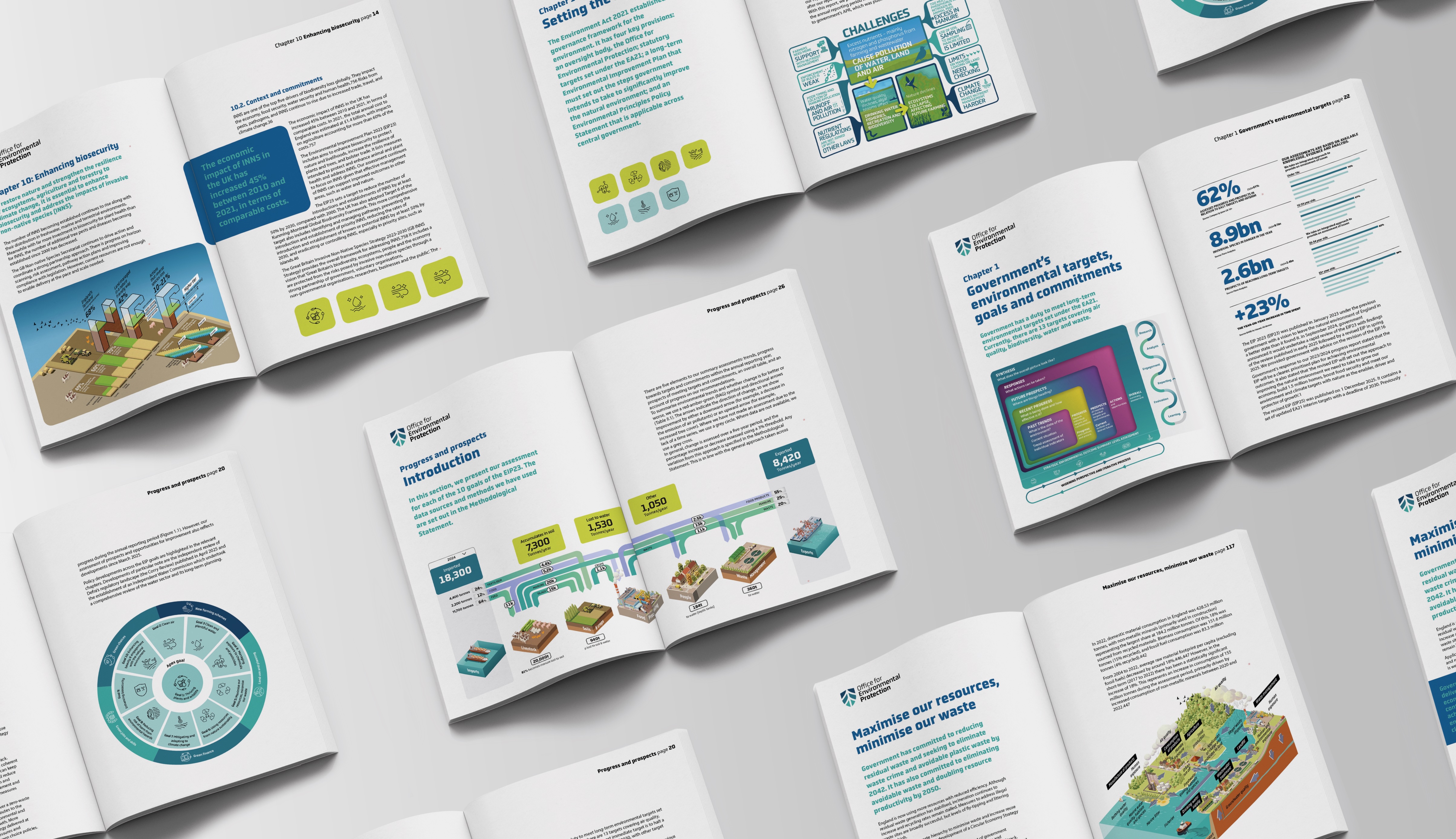
That is exactly the challenge we exist for. We help audiences understand important findings, engage with them, and act on them — across the full range of readers a statutory report has to reach.
Candy Wallace leads the editorial process — reading across multi-author drafts, finding the single coherent voice, ensuring key messages land whether a reader has thirty minutes or three hours.
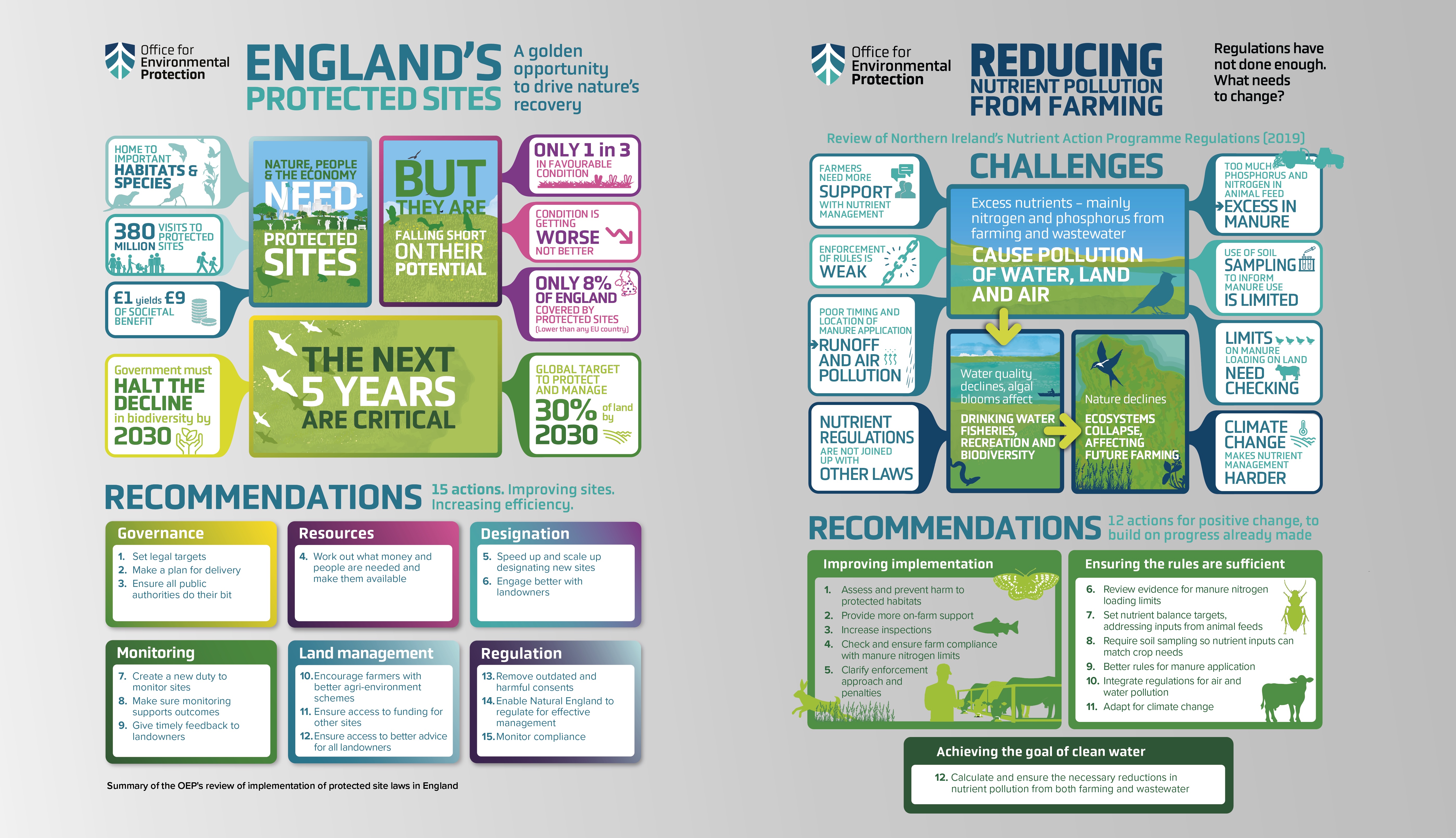
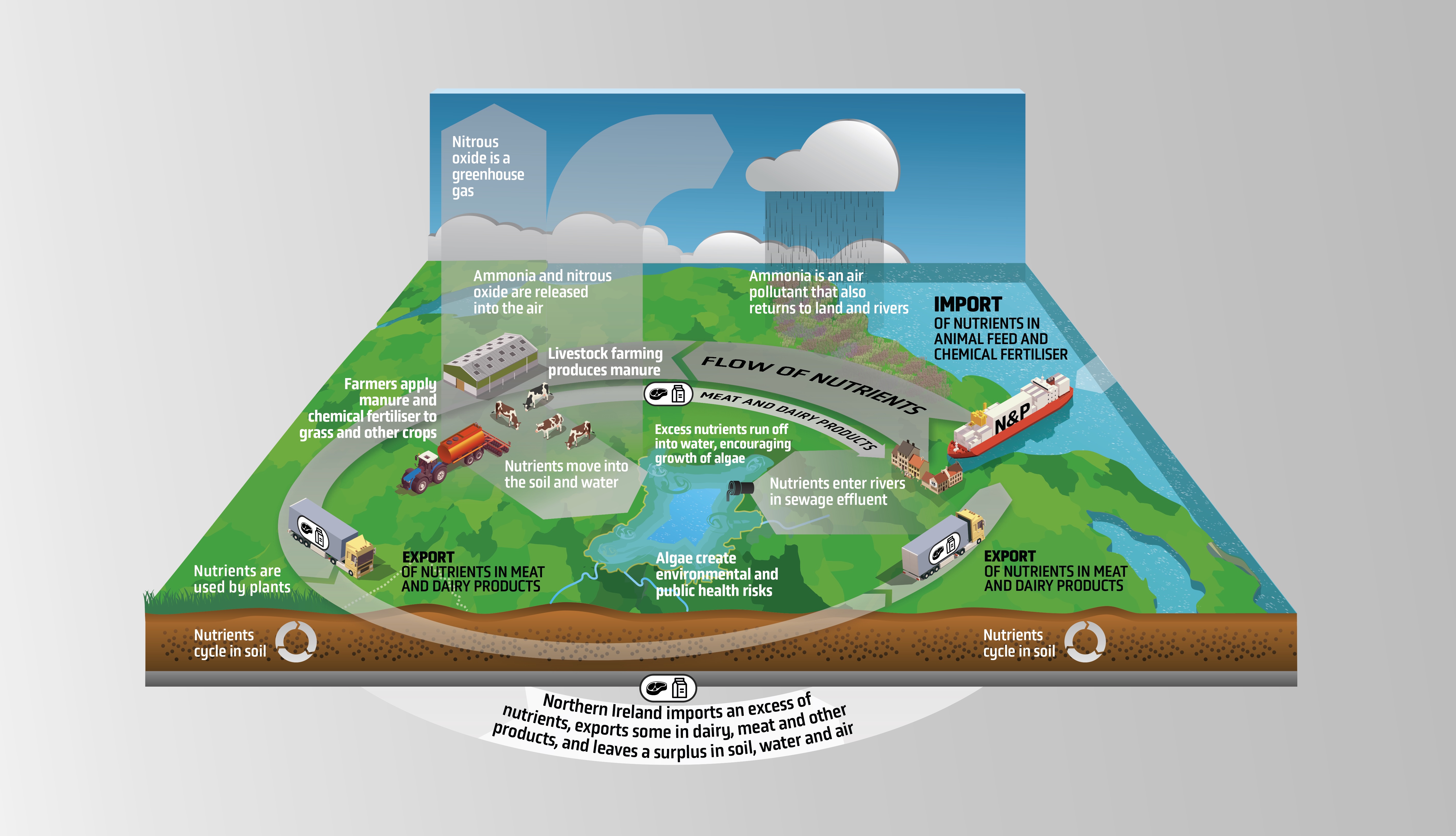
The infographic suite is built from raw data and unpublished findings, designed to carry the argument visually — for the reader who will not read every page, and for the channels where the work needs to travel beyond the original publication.
We've been making reports interesting for the Office for Environmental Protection, HS2, the Natural History Museum, the Office for National Statistics, and the Science Museum for 15 years.
Need help with complex reporting?
We are easily procurable via the Communications Marketplace DPS (RM6124).